Showing posts with label writer's block. Show all posts

Sunday, February 01, 2026

My words--and my heart--feel frozen


My words--and my heart--feel frozen.

They froze this past month as I watched multiple videos of Americans shooting Americans on American soil. Not just shooting but murdering, execution-style, as if I was watching a scene from some Hollywood movie about the mob or the invasion of an alien army. Only it wasn’t a movie. It wasn’t an alien army.

My stomach tightened in horror at the sound of gunshots and the sight of weapons raised and fired by Americans on innocent Americans, and my stomach is still clenched, still mourning Renee Macklin Good and Alex Pretti, two Americans who stepped forward to observe and protect immigrants, those among us who are the least safe and the least protected.

This morning, feeling the weight of grief, I didn’t want to write anything. Not a word. What could I say that would change anything? How could I write anything about the writing process when the act of writing itself seemed so futile, such a small act, compared to people being gunned down on the street for simply raising their voices or for offering help to those beside them who might have fallen down?

I pulled up a chair, anyway. I needed some way of overcoming the weight of this sadness and grief, this despair that has come with the murders and with the failure of anyone in this administration to hold the murderers accountable.

The journal page in front of me was blank. I stared at it, not thinking I had any words to offer. Not thinking I had anything to say. But I realized this: if I didn’t keep writing, one more voice would be silenced. Not by a bullet but by my own fear. By my own cowardice. By my own inability to stand up to forces that want to silence anyone who dares take a stand against this administration’s endless stream of propaganda.

And so I lifted my pen and started writing, and with each word I began to understand how important it is to keep writing through the sadness and despair, through the doubts and the fears, to keep writing in order to keep alive the dream of America, the America that I believe in, the America that Good and Pretti gave their lives to preserve, an America that offers freedom to all.

I can still feel my stomach clench in horror at the public executions of people who had the courage and compassion to join so many others and stand up for human rights and for democracy—for an America they believed in and which so many of us believe in, even as the boots of those carrying out the orders -- sent from the desk in the White House occupied by a man who imagines himself king -- try to stamp out the American dream, as if the dream itself is nothing more than a figment of our imagination, a fantasy, a tiny candle flame, rather than an unquenchable idea that over the centuries has forged a nation of immigrants into a beacon of light for the rest of the world.

The America that I know and believe in is a country that welcomes refugees regardless of skin color, religious belief, or country of origin. It welcomes those who need a home and provides a sanctuary to build a life, gain an education, raise a family, create the space to make art, build a business, or do the research that might lead to a new scientific discovery. It’s an America where we can join hands and together fulfill our hopes and dreams, our longing for liberty, our desire for freedom from oppression, our belief in love not hate, our trust in democracy not totalitarianism.

Maybe all I’m trying to say is thank you to all the demonstrators in Minnesota and elsewhere who have stood in frigid temperatures for days to remind us of where we live and what our country stands for. Maybe all I’m trying to say is thank you to Renee Good and Alex Pretti for your willingness to take a stand, for showing us how and why we all need to take a stand.

We owe so much to everyone taking a stand, for insisting that words matter, for demanding that all lives matters, for letting us know that stories and poems and songs matter.

The sound of your voices in the streets of Minneapolis and other American cities inspires us to keep looking for the good in people, to keep believing in the future, to keep writing to unfreeze our hearts and our words.




Wednesday, October 01, 2025

What do you have to say this morning?

The blank page is waiting.

All you hear is silence.

No words, yet.


Try not to panic.

Try not to think OMG, I'll never write anything.

Try not to listen to the negative 

voice in your head telling you 

how could you ever think 

you could write anything?


Instead, take a breath.

Close your eyes and exhale.

Take another breath and open your eyes.

Do you see the blank page in front of you?

What if you imagine it's like a still body of water

waiting for you to step into it?


Or like a snow-covered path

before anyone else has set foot on it?

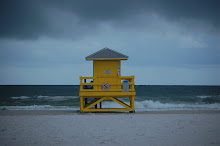
Or maybe like a beach in the early morning

after the tide has retreated, leaving behind

a pristine patch of sand waiting for

your footprints to mark the start of the day?


Begin wherever you are and go from there.

Begin with a memory of someone who brings you joy

or with a wound that refuses to heal.


Put down a word --"grasshopper," say, or "grass" 

or "sunlight" or "coffee" -- and see where the word leads you.


Put aside your fears of making a mess--writing is a messy process!

Put aside your doubts that your words won't mean anything.


Listen to the voice encouraging you to begin,

the voice that you first heard urging you

to put words on paper.


Open yourself the way you'd open a book.

Let your pen touch the page.


Make a mark on the paper--a star, perhaps,

to guide you on your way--and listen 

to the words that come to you now.


Listen to the wind whispering

"Write! Before it's too late!"


Now turn the page and begin.

Tuesday, June 17, 2025

Don't panic!

Not writing?

Take a breath.

Then take another.

This moment will pass and words will return the same way your breath returns.

The page in front of you may appear blank at the moment, but it won't stay empty forever.

You have choices, decisions to make, even when it feels as if you have none and can do nothing more than wallow in self-pity and despair, fearing you've lost your gift, and you'll never write again.

But what if the situation isn't as bleak or as dire as you fear?

What if you take these moments of not writing and, instead of panicking, lift your finger off the panic button and open your eyes to whatever is happening around you in this moment.

What do you see? A messy desk covered with papers?  A shelf filled with books? Clouds floating by?

What do you hear? A bird singing outside your window? The sound of a neighbor playing the violin?

What about your breath? Can you take a long slow inhale and feel your lungs filling up? Can you let the air out slowly through your nose?

What if you start with this moment?

What if you take a pen and open your journal to a blank page and try again.

What if you start by making a simple line.

Or a row of dots.

Or a silly doodle.

Just make a mark. Let your pen touch the paper simply to prove to yourself that you can still make a mark.

Then take another deep breath, close your eyes, and ask yourself what you feel now.

Open your eyes and ask yourself what you see.

Record what you're feeling (or seeing) in the moment.

Let your hand relax.

Tell yourself you can write for a minute. 

Or two. 

Or maybe five.

Watch how you slip out of yourself onto the page.

And how words appear out of nowhere. 

Filling the empty page again.


Monday, December 02, 2024

You need to sit listening to the silence

You need to sit listening to the silence, 

staring at the blank page, 

waiting for words to come, 

for letters to form beneath your pen.


You need to be patient, 

to stop rushing, 

to stop forcing the pen to write 

what it's not yet ready to write.


You need to sit in silence, 

listening to the silence, 

letting the silence wash over you.


You need to embrace the silence, 

welcome it, 

accept it, 

understand that all 

you're able to hear today

is silence, 

and that's ok


You need to know 

writing doesn't come 

with any guarantees.


You need to know 

words are shy, 

often fickle, 

afraid of committing themselves 

to paper.


You need to know 

it's not a sin 

to leave the page blank, 

to sit in silence, 

to listen to silence, 

to rise in silence ... 

without writing a word. 


On days like this 

you need to have faith 

the words will come 

and the ink will flow 

and your hand will move again

and you'll hear a voice in the silence --

just not today.


Monday, December 14, 2020

Getting Unstuck

This is the morning you hit a wall. 

You don't know the answer. You don't even know the question to ask. And you stop. You come to a halt. With no way to go forward. 

So what do you do?

Give up? Figure out another way to keep going? Where do you find the answer? How do you keep going when you don't know where you're going, or what comes next, or how to go forward?

What do you do if you're unable to move? Feeling stuck?

How do you get unstuck?

You can't stare at the page forever. 

So, maybe, if words and ideas don't come, you put the pen away. 

Close the journal. Tell yourself it's not yet time. The words will come, just not today.

Read instead. Open a book. Lose yourself in someone else's story or poem. Fill yourself with words.

Or watch a movie. Dive into story. Let the images wash over you like a cool, refreshing stream.

Or go outside for a walk. 

Think away from your desk. Or stop thinking. 

Let life unfold minute by minute, and savor the process of unfolding. 

See what's around you, make discoveries as you walk. Or sit by a lake and dream.

Watch clouds floating by. Notice sunlight falling on leaves. Listen to the wind. 

Wait for words to come, to reveal the answer to the question you couldn't solve a moment ago.

And suddenly a door will open, and there it is waiting for you.

And you are unstuck, Your hand is moving across the page again.

Writing.

Sunday, December 17, 2017

End of Year Musings

It’s the end of the year and who can count how many hours we’ve sat at our desks waiting for words while the minutes passed by and our lives slipped off in directions that we could never have predicted?

Who can count the number of words or sentences or stanzas that we’ve written or the journal pages onto which we’ve poured our hearts?

Each year December comes like this, dark and dreary, with freezing rain and sleeting snow and a sense of doubt and hopelessness—and yes, with regrets, too—and then the sun makes its turn, and days begin to lengthen again as the earth sails into a new year.

And just as surely as the return of the sun and the dispersal of darkness, our words come, too—if we believe in the process and in ourselves—shyly, at first, perhaps, but they come again with a fresh urgency and need, seeping up out of the thawing ground, pouring forth like a melting stream onto a new page.

If we can hold onto our belief through the darkness and doldrums and frigid days of silence, if we can trust in this mysterious process to bring us what we need when we need it, if we can keep sitting at our desks and doing our work, waiting however long we might need to wait, then we can say we have written without regrets.

We’ve done our best.

And that is all anyone can ask.

It doesn’t matter whether we write fiction or poetry, memoirs or investigative journalism, short stories or novels, journal entries, notes on scraps of paper, forgotten thoughts in the margins of books that we've loved over the past year.

What matters is that we are still writing, still using pen and paper to explore the world and our life, still curious about what we might be thinking and eager to find out (thanks to the words that we put on paper) what thoughts are swirling through our heads, what emotions are hiding in our hearts.

It takes a stubborn determination and unrelenting perseverance to write.

Some writers may give up after only a few minutes of facing a blank page, the critical voices in our heads growing louder and louder until the voices become unbearable and we can’t stand to hear them anymore and have to push away from the desk and shout “Enough!” 

But other writers may just glare at the blank page and say, “Really? You think you can scare me? You think you can win?” And we stand up and go into the kitchen and brew a fresh pot of coffee, or steal a cookie from the cookie jar, and return to our desks and wait for the words to come.

And we wait for as long as we need to wait believing that patience is stronger than impatience and that words are stronger than silence.


Thanks to all for stopping by Wordswimmer this past year. Your presence in the water has helped keep me afloat more than you can know. May the the year ahead bring you a sweet-flowing river of words and stories.

Sunday, January 17, 2016

A Dry Heart

Failure to sell your work, and the rejection that accompanies such failure, can eat away at your heart until there’s nothing left but a shell pumping blood but no longer pumping words. A dry heart.

It can happen to you if you’re not careful or vigilant enough, if you’re not aware of the words dwindling or the sentences shrinking or the desire drying up.

It’s a disease, this dry heart. Invisible. Silent. Before you know it, it has stolen your voice, and your pen stops moving across the page, and you can read but the words of others only echo in your ears, never penetrating that space where your own words used to form like new currents in a stream.

It’s like living outside of words, outside the world of words and stories that you used to inhabit. Now you are an outsider looking in.

How words begin to flow again is different for each of us.

Sometimes it’s simply a matter of time and letting the disease of dry heart take its course. It will leave like a drought when the clouds come and drops of rain and words begin to fall, and you can only wait.

For others it’s a refusal to wait; they dig, drill, and search in desperation each day for new sources of water to carry them through the drought.

For some there is no cure. Once dry heart strikes, the heart withers, words die, and the writer is gone, in the same way that grasses and wildflowers dry up and die, never to return.

To keep dry heart at bay, to keep your heart filled with words, you need to fill it with hope and faith.

You need to continue to believe in the possibility of finding stories wherever you might find them—in the aisles of a grocery store, in the waiting room of a car repair shop, on a bus or a beach, in books, in movies, on Facebook and Twitter.

Listening for stories—it’s what can keep your heart alive.

So can writing in a journal, even gibberish, day after day. The simple (or not-so-simple) act of writing can prime the pump so that when you’re ready to begin, your well has remained full, and your words are there, at the tip of your pen, ready to flow onto the page.

To keep dry heart at bay, you need to surround yourself with people who believe in you.

You need to read interviews with other writers to find out how they have combatted dry heart to keep writing.

You need to read.

If you can’t read, you need to watch Netflix, or you need to go to the movies, all for the sake of hearing and seeing stories.

If you can’t watch TV, then you need to sit in the park and listen to nature spin its ongoing story of seasons changing, of life and death, and of returning to life.

Each year we tell ourselves a different story. 

What story will we tell ourselves this year, I wonder, to prompt the words to flow again?

Sunday, October 25, 2015

When Autumn Comes

When autumn comes, nature begins to slow down, and my brain wants to go into a deep sleep.

It’s the time of year when some of us come up against a wall and can’t see beyond it.

Where does the wall come from? Why does it appear? How do we deal with it until it vanishes? Maybe we should just go into hibernation and wait for it to fall down on its own.

Writing—or trying to write—on autumn days can feel like going out fishing and not catching anything.

You put your line in the water. You wait patiently for a bite. Nothing happens. So you put the line in again the next day. And nothing happens—again. At the end of the day, you’ve gone fishing. But you haven’t caught anything.

And the next day you go out in a boat. You drop a line into the water. You do it again. Fishing. Waiting. Searching for something beneath the surface that you cannot see. You lower your line and hope for a bite, for something wild to pull your imagination, to engage your intellect, your emotions, your whole being.

When the fish—the idea—strikes, it’s like bliss.

But when the line comes up empty, it’s discouraging.

Your mind fills with questions. Is it you? Is it your line? Is it your bait? Is it where you’re fishing?

You tell yourself you need to try somewhere else. A deeper hole. A shallower shoal. A beach with more seaweed. Or less rocks. Or more sand. Some place different.

Go out at night instead of early morning. Or try noon. See if time plays a role in your ability to catch something.

But here’s the thing: it’s a beautiful autumn day. The sky is crystal blue. There’s a cool, pleasant breeze. What difference does it make if you catch something or not?

When you step into the boat, you can enjoy the simple act of stepping into the boat. When you look up at the sky, you can enjoy the shade of blue that returns every autumn.

Look at the water. Is it smooth or rough? Warm or cold? Dark or clear? Can you see down to the bottom?

Look at your hands holding the rod, the pen, the pencil.

Give thanks for the beauty of the sky and the air and the water, for your eyes that can see, for your imagination, which may lay dormant now, just as the earth lays fallow for a time but is filled with hidden riches.

Even if you can’t find the words to put down, you can still give thanks for it all.

Maybe you can imagine a time when the wall melts away and you’ll hear your heart sing again. 

Maybe you'll find the faith to believe that words will spill out of your pen once the snow melts away in the spring.

Maybe you can already begin to hear it, the faint stirring of a story?

Patience...

Sunday, August 10, 2014

Stuck in the Muck

It happens when you least expect it.

You take a turn down a road that looks promising and before you realize what’s happening the tires sink into the muck and you can’t back out.

Or you are swimming in clear water and the next thing you know there are weeds tangled around your arms and legs and you are sinking into the mud.

Your brain is stuck, your pen is frozen.

Words have vanished; they simply won’t come.

No matter how hard you push or pull or plead, the words will not appear. 

You are stuck in the muck.

It’s where I’ve floundered for the past few days.

Stuck in the muck, going nowhere. 

You may be wondering how in the world I got stuck in the muck.

I could say that I wasn’t paying attention to where I was going, but that isn’t true. 

I could say that I wasn’t writing what I felt passionate about, but that isn’t true either.

I got stuck because I received conflicting advice about a work-in-progress

And the conflicting advice stopped me in my tracks.

I ended up questioning the worth of my story.

And questioning the worth of my story led to questioning my own worth as a writer.

And once I started questioning my worth as a writer, words froze. They dried up and disappeared.

Getting stuck in the muck, I discovered, is more than just having words disappear. 

It’s having your confidence as a writer disappear, too. 

Your desire to write anything is gone, and you fear yet more criticism and advice.

Whatever compels you to write shrivels up and hides, and no amount of pleading will bring it out of its shell.

Some writers remain stuck in the muck for days and weeks and months.

Some remain stuck for years listening to well-meaning voices telling them what they should or shouldn’t write.

Luckily, though, I have friends who have faith in my ability. 

They were kind enough to remind me of that ability and, in so doing, helped me find my way out of the muck.

Their words of faith helped me regain my footing so that I could return to solid ground, to a place where I could hear my own voice again.

I could trust my intuition, I could follow it again without trying to second-guess myself, without looking back over my shoulder.

There is always the possibility, of course, that I can find myself stuck in the muck again. 

Any of us can get stuck in the muck. It's one of the dangers of writing.

But if we can take a long view of our work, we may be able to see that getting stuck in the muck is simply part of the larger process of writing and finding our way.


Sunday, August 05, 2012

Breaking The Ice

Even in the heat of summer, when the pavement sizzles and the sidewalk buckles, a writer can feel like she’s trying to break through the ice to find the words to tell her story.

At times it can feel as if our words are trapped beneath the surface, frozen like fish caught in the ice while swimming upstream, irretrievable until the next thaw.

How can a writer break the ice?

Some days I find writing on a computer feels like trying to break through the ice. I need paper and pen to feel the warmth of words beneath my fingers. The simple sound of a pen scratching the paper will somehow warm the ice and release the words that were trapped beneath the keyboard, frozen, stuck.

Writing on the computer often feels too clean, too neat, too cold, too abstract—mere digital points of light and color, symbols rather than words. With a pen and pencil, writing is messy. Instead of pressing a button or tapping a key… and watching the words vanish like smoke into the Ethernet (or wherever deleted words on a computer screen go), I can feel with my pen the tactile sensation of scratching out a word or sentence or paragraph.

There are days when I may stare for hours at a computer screen before realizing that I need to switch from the keyboard and screen to pen and paper. Words don’t flow when my hand is still. That’s why I find a pen so helpful in breaking the ice. It lets my hand move across the page in a fluid motion, not the helter-skelter motion of typing, and that freedom of motion frees up something inside me… like freeing a block of ice…so that the water can flow again.

Sometimes all it takes to break the ice is the decision to push aside the computer and find a pen, a pad of paper, and I'l begin to write the old-fashion way, smudging my fingers with ink or charcoal, poking my eye with the tip of an eraser, accidentally drawing blood from a paper-cut.

The next time you find yourself staring for hours at a blank computer screen, try pushing aside the keyboard, picking up a pen and a pad of paper, and letting your hand start moving across the page. Write anything—the silliest gibberish that you can imagine—and see if after a few minutes the words don’t start flowing, falling into place, forming a story that only minutes ago was stuck, frozen, in the ice.

For more information on the benefits of writing by hand, visit:

Sunday, December 14, 2008

Dry Well

When the well is dry--
bone dry,
drip-dried,
brain-fried--
what do you do?

You pump,
and pump,
and pump...

and what do you get?

Nothing
but an empty
bucket
and a creaky
sound
in your ears?

So, you wait.
And watch.
And wait.

Creak.
Creak.
Creak.

Still dry.

Don't give up.

Still dry.

Don't jump!

Water will return
some day.

Creak.
Creak.
Creak.

Watch and wait.
Watch and wait...

Nothing yet.

Maybe tomorrow?

Just a trickle?
A drip?
A drop?

Water will flow again.
(You have to believe this.)

Watch.
Wait.

Soon.

For more on what to do when the well runs dry, visit:
http://www.tnellen.com/cybereng/poetry/istop.html
http://www.cynthiaharrison.com/?p=32
http://www.newyorker.com/archive/2004/06/14/040614fa_fact
http://www.npr.org/templates/story/story.php?storyId=9620861
http://ridingwiththetopdown.blogspot.com/2008/09/imagination-unleashed-guest-blogger.html
http://community.eharlequin.com/content/refilling-well-and-prize-win
http://www.bitsofnews.com/content/view/1104/42/

Monday, September 19, 2005

Swimming Through Black Holes.

What do you do when you find yourself swimming through a Black Hole?

When, suddenly, you feel all your words being sucked out of you, along with your desire to write ...and your ideas for stories... and even your hope for the future?

When all you feel is darkness...and all that you see is darkness? And it's like sinking--or worse--like plummeting off a cliff into darkness...not knowing which way is up or down?

What do you do? Resist and fight back...or acquiesce and let yourself be overwhelmed by darkness?

Here's something to consider the next time you feel yourself swimming through a Black Hole: "God lets you write; he also lets you not write."

That's a quote attributed to Kurt Vonnegut in Hilma Wolitzer's The Company of Writers, a lucid book full of insights into the writing process.

Vonnegut isn't the only writer in Wolitzer's book who comments on the Black Holes of a writer's life. Here's what Joyce wrote to his brother in 1906: "No pen, no ink, no table, no room, no time, no quiet, no inclination."

Wolitzer herself observes: If the dictionary definition of a writer is "one who writes," doesn't it follow that you're no longer a writer if you're not writing?

"Not exactly," she writes.

"A considerable part of the process is the dreaming phase, when ideas and language and characters are simmering in the unconscious, not ready yet to rise up and coalesce into actual written prose. Some things can't be rushed: a certain amount of patience is required, as is the belief that waiting to write is in itself productive."

So...what if Black Holes are an integral--albeit painful--part of a writer's life?

They may come at unpredictable times simply because they're necessary to our growth and self-understanding as writers. (Eudora Welty, while caring for her ailing mother for fifteen years, wrote only three stories.)

Or they may appear after you've finished a major project and feel bereft at having it end... and no longer find yourself with the same compelling need to sit down at your desk every day. (Willa Cather, after a particularly fruitful period of work, was unable to keep up the same intensity and slowed down for five years.)

What if, as Wolitzer suggests, the Black Hole serves a purpose, and the darkness is an essential part of the writing process...a time to stop thinking, to stop writing, and to let yourself and your imagination float free?

What if the darkness, as hard as it feels, is not another form of the doldrums, nor writer's block, but a part of the writing process that's invisible...like a field with seeds growing quietly under the surface, pushing through the darkness toward the light?

What if, instead of trying to penetrate the darkness with words, you put down your pen and listen to the wind... and the waves lapping at the shore of your imagination... and the healing sounds of this earth?

What if you give yourself the gift of patience and let the well of words refill until you feel strong enough to pick up your pen again?

Until that moment arrives, you might read with abandon stories that you've never read before.

Or treat yourself to a new journal, or a cup of coffee at a glitzy cafe, or a bag of buttered popcorn at an afternoon matinee.

Consider what brings you joy.

Ask yourself what you are passionate about. What do you want to explore in the time you have left on this earth?

Listen closely to your heart.

Wait--without expecting anything.

The words are there, deep inside you, waiting to ripen.

Have faith in the process... and remember Faulkner's reassuring words: "If a story is in you, it has got to come out."

It's unpredictable and myserious, this search for stories, and not always easy. But in time the words will come, bubbling to the surface, and you'll find yourself swimming in clear water again.