Showing posts with label commitment. Show all posts

Thursday, November 15, 2018

Finding Your Way Home


"Just as a painter needs light in order to put the finishing touches to his picture, so I need an inner light, which I feel I never have enough of in the autumn." -- Leo Tolstoy
"Light will someday split you open." -- Hafez
As you write into the unknown, swimming alone for weeks and weeks (and often for years and years), it's not always easy to find your way home.

You may look up from the page one day and find yourself far from shore, disoriented, unable to see the shoreline, unsure of what direction to swim in.

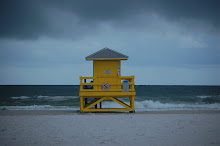
If only the sweeping beam of light from a lighthouse could guide you back to land.

But, alas, there is no lighthouse.

You are swimming in water that is deep and dark, and your arms are tired after swimming for so long, and you can barely kick, and you are close to sinking in a story that no longer makes sense.

It can feel like you’re drowning and that you will never reach solid ground again.

It’s just you… and the deep, dark water… and the empty sky…and your story, and words swirling in your head, and a faint whisper of a voice pleading with you: please, please, keep writing!

But how can you keep writing?

How can you find the strength within to keep going?

At some point you might stop to tread water and gain a little extra energy from the pause in your stroke.

Or you might float on your back for a while to rest and catch your breath.

Taking a break is always a possibility, an essential one at times for the future survival of your project (and for yourself as a writer).

But here’s the thing. After you rest and start swimming again, you may still not be sure what direction to swim in. (And remember there are sharks. There are always sharks.)

In the darkness, you keep wishing for a light to guide you.

If only there was a light.

And the thing is … there is always a light.

It’s the light that burns inside you like an eternal flame, a flame that will light your way and strengthen you once you become aware of its presence.

Most importantly, its light will help you remember what led you so far from shore in the first place.

It's this flame’s brightness that has the power to inspire you … and to reveal the way back to shore.

Remember: your inner light will always show you the way home.


Sunday, November 13, 2016

The Shell Path

Even though I don’t live near the sea, there’s a shell path on the side of our front yard, a narrow swath of white seashells that marks the boundary between our property and our neighbor’s yard.

It’s not a very wide path, perhaps two feet across, and it’s not a very long path, maybe thirty or forty feet long, but it helps establish a clear line between the two yards, and I love the way the shells remind me of the sea, even if I can’t see or hear it from our home.


Every month or so I spend a few hours moving up and down the path pulling weeds. It is tedious work because the weeds are often long and stringy and deeply rooted. It’s not easy to grasp them, especially when wearing gardening gloves, and it’s never easy to pull them out entirely.

I’ll squat on my heels, stretching my calves and Achilles tendons, straining my quads, until I switch legs for balance or to relieve a cramp, and I’ll work with my back bent beneath the warm sun and think about the sea and how the sunlight sparkles off its surface and how the waves roll into shore and then retreat out to sea again.

After ten or fifteen minutes, it’s easy to lose my patience and perspective, to forget the larger picture—how the path serves as a boundary between our yards, how the shells, once weeded, look so beautiful, like a path stretching toward the sea—and it’s easy to become frustrated because the work doesn’t go faster.


But becoming frustrated doesn’t help the work. It only inhibits my ability to enjoy the sight of the shells and the vision of the finished path in my mind.

That's when I have to remind myself to slow down, to let go of my expectations of how the work should go, and to see—really look hard and see—what’s in front of me at this moment, to understand what needs to be taken care of now.

Maybe the weeds don’t belong where they are growing, or I'd prefer them to grow elsewhere, but rushing to pull them will only mean that I’ll miss more of the weeds than I’ll pull. And then I’ll only have to return to pull out the rest at some point.

This process of weeding, of keeping the shell path free of weeds, reminds me of the way the revision process works.

I’ll put down words in the same way a gardener might put down a shell path. At first, the words look perfect. The sentences appear straightforward, the verbs and adjectives strong and firmly rooted, and there isn’t a weed in sight.

But then I begin to see things that I didn’t see, not because I wasn’t careful or precise when I put the words down, but because I simply lacked the ability to see the weeds. I was too close to the material.

So, when I go back to the beginning of a manuscript to revise it, I try to slow down, to look at it as part of a larger picture, to understand what needs to be done in this moment. It’s the same process as weeding the shell path.

I have to pull unnecessary words the same way I pull weeds on the shell path. I have to go back to the beginning and start over. Neatening, straightening, clearing out clutter, cleaning up.

I want the manuscript to read cleanly, without any distractions for the reader, just as I want the path to offer a clear, unobstructed path, whether it leads to our back yard or to the sea in my imagination.

This kind of work takes patience. It requires a willingness to slow down and really see what is on the page (not what I might hope or think is on the page but what is actually there).

Most of all, it takes a certain commitment and devotion to work on the path, to keep working, even when my legs and back ache, even when my fingers start to bleed from reaching past the sharp edges of the shells and the gloves have torn, even when the mosquito bites itch and the red ant bites burn as if my skin is on fire.

Each writer must learn how to stay in the moment and do this work.


-->