Each time I put pen
to paper the pen takes
an unexpected turn,
this way or that,
a new path I hadn't
seen before that moment
of discovery.
It's what makes the
act of writing so
fraught with tension,
the not knowing
what will happen,
the not knowing if
anything will happen,
or if the pen will stand
motionless over the page
not moving at all,
leaving the page as fresh
and unmarked (without
a ripple) as when
I sat down to begin.
The secret to writing is,
simply, to begin, to let
the pen move across the
page, not knowing what
will come next, the nib
touching the blankness
of the page, and, like a
pebble skipping across
the still surface of
a pond, sending ripples
outward, reaching
toward shore.
Showing posts with label pre-writing. Show all posts
Showing posts with label pre-writing. Show all posts
Sunday, September 25, 2016


Sunday, May 06, 2012
Daydreaming
When was the last time you pulled yourself away from your desk, lay on the grass, and watched the clouds float by?
Instead of shutting off your computer and going for a walk, how many times have you stayed glued to your screen, switching back and forth between e-mail accounts, or checking Facebook or Tumblr, for new postings?
Can you remember when you simply sat in a beach chair overlooking a lake or river or the sea, or found a park bench to watch people as they passed?
If you can’t recall the last time that you took a break from your work, put down your pencil and stepped outside to look up at the stars, or kicked off your shoes and ran a bath, maybe it’s time that you take a moment now to simply close your eyes and daydream.
Daydreaming doesn’t require a goal, a set time in which to pursue one’s dreams, a schedule or structured way of dreaming. The whole point of daydreaming is that there is no goal or structure. It’s a chance to delight in one’s imagination for the pure pleasure of enjoying the scenes and pictures as they appear.
Writing is a form of daydreaming, but there’s a difference. You need to use words to write, whereas when you daydream you only need to see the pictures, the images. It can be like watching a movie. Just let the images wash over you. Your imagination will immerse you in the scenes. You'll enter a new world, discover new sights.
Yes, there’s a benefit to daydreaming, aside from the pleasure that it gives. You can use the skills that you learn in daydreaming to help you envision the story that you want to write.
But that’s a side-benefit, really. The true benefit is the simple pleasure that you receive from letting your imagination take you on a journey to the clouds and back.
For more information about daydreaming, visit:
http://jolenesbeenwriting.blogspot.com/2012/01/daydreaming-to-writing.html
http://www.thewritersclinic.com/1417/surprising-secret-success-daydreams/
http://kevinbrown55.hubpages.com/hub/daydreaming-and-creative-writing
http://www.creative-writing-now.com/what-is-fiction.html
http://archive.constantcontact.com/fs016/1101860524916/archive/1102656912346.html
http://www.melbournerwg.com/1/post/2012/01/daydreaming-filling-the-blank-white-page.html
Instead of shutting off your computer and going for a walk, how many times have you stayed glued to your screen, switching back and forth between e-mail accounts, or checking Facebook or Tumblr, for new postings?
Can you remember when you simply sat in a beach chair overlooking a lake or river or the sea, or found a park bench to watch people as they passed?
If you can’t recall the last time that you took a break from your work, put down your pencil and stepped outside to look up at the stars, or kicked off your shoes and ran a bath, maybe it’s time that you take a moment now to simply close your eyes and daydream.
Daydreaming doesn’t require a goal, a set time in which to pursue one’s dreams, a schedule or structured way of dreaming. The whole point of daydreaming is that there is no goal or structure. It’s a chance to delight in one’s imagination for the pure pleasure of enjoying the scenes and pictures as they appear.
Writing is a form of daydreaming, but there’s a difference. You need to use words to write, whereas when you daydream you only need to see the pictures, the images. It can be like watching a movie. Just let the images wash over you. Your imagination will immerse you in the scenes. You'll enter a new world, discover new sights.
Yes, there’s a benefit to daydreaming, aside from the pleasure that it gives. You can use the skills that you learn in daydreaming to help you envision the story that you want to write.
But that’s a side-benefit, really. The true benefit is the simple pleasure that you receive from letting your imagination take you on a journey to the clouds and back.
For more information about daydreaming, visit:
http://jolenesbeenwriting.blogspot.com/2012/01/daydreaming-to-writing.html
http://www.thewritersclinic.com/1417/surprising-secret-success-daydreams/
http://kevinbrown55.hubpages.com/hub/daydreaming-and-creative-writing
http://www.creative-writing-now.com/what-is-fiction.html
http://archive.constantcontact.com/fs016/1101860524916/archive/1102656912346.html
http://www.melbournerwg.com/1/post/2012/01/daydreaming-filling-the-blank-white-page.html
Sunday, September 13, 2009
Before Jumping In
Before any exercise routine, it’s important to ease into the activity slowly, stretching your muscles before engaging in more energetic activity so you can avoid straining a muscle or rupturing a tendon.
It’s the same with writing. In order to prepare the muscles that you’ll use when you dive deep into your imagination and begin your search for words, you might want to ease into the water with pre-writing exercises.
That means for some writers thinking about what you’ll write before you sit down at your desks.
It might involve general thoughts about the scope or direction of what you want to write, or more specific thoughts about how to begin a sentence, the word to use to start a paragraph, the scene to introduce a new character.
Often these thoughts may seem random when done in your head rather than with pen and paper, but they help once you sit down to write so that you can begin without floundering in the water or fearing that, once in the water, your muscles won’t be able to keep you afloat.
For other writers it means a few pages of free-writing before beginning work on the day’s project.
Or keeping a journal (another form of free-writing) to explore ideas or incidents or themes that may seem interesting at that moment, on that day.
If you think about a project before immersing yourself, or free-write, or keep a journal, you may find the act of pre-writing a kind of meditation on what you’re about to do.
Pre-writing may help you focus your thoughts and energy, and often it may help you gain new insights into a story that bring a deeper understanding of what you're hoping to achieve with your work.
So, next time you’re planning to sit down to write, take a minute or two before jumping in to warm up.
Stretch those muscles!
Up, down, right, left!
Say hello to your hamstrings!
Good morning, spine!
Even a few finger exercises might not hurt.
See if pre-writing makes a difference, and let us know if it gives you a new perspective on your work.
For more on pre-writing, visit:
http://blog.willweaverbooks.com/2009/04/10/prewriting-strategies--every-book-is-its-own-puzzle.aspx
http://jmarkbertrand.typepad.com/writeaboutnow/2007/11/planning-a-no-1.html
http://www.cynthialeitichsmith.com/lit_resources/for_writers/writing_for_kids/invisible_playmates.html
http://www.shawn-scarber.com/?p=164
http://www.ehow.com/how_4799216_write-novel-prewriting.html
http://www.humboldt.edu/~tdd2/Prewriting.htm#top
http://www.nanowrimo.org/eng/node/3018759
http://www.cynthiaharrison.com/?p=394
http://community.livejournal.com/thru_the_booth/tag/writing+warm+up
http://www.writeshop.com/blog/2008/07/25/writing-warm-ups/
http://www.ehow.com/how_5039997_use-warm-up-article-writing.html
http://wordywoman.com/tag/writing-warm-up/
http://www.manchesterbookaward.com/article/152/
It’s the same with writing. In order to prepare the muscles that you’ll use when you dive deep into your imagination and begin your search for words, you might want to ease into the water with pre-writing exercises.
That means for some writers thinking about what you’ll write before you sit down at your desks.
It might involve general thoughts about the scope or direction of what you want to write, or more specific thoughts about how to begin a sentence, the word to use to start a paragraph, the scene to introduce a new character.
Often these thoughts may seem random when done in your head rather than with pen and paper, but they help once you sit down to write so that you can begin without floundering in the water or fearing that, once in the water, your muscles won’t be able to keep you afloat.
For other writers it means a few pages of free-writing before beginning work on the day’s project.
Or keeping a journal (another form of free-writing) to explore ideas or incidents or themes that may seem interesting at that moment, on that day.
If you think about a project before immersing yourself, or free-write, or keep a journal, you may find the act of pre-writing a kind of meditation on what you’re about to do.
Pre-writing may help you focus your thoughts and energy, and often it may help you gain new insights into a story that bring a deeper understanding of what you're hoping to achieve with your work.
So, next time you’re planning to sit down to write, take a minute or two before jumping in to warm up.
Stretch those muscles!
Up, down, right, left!
Say hello to your hamstrings!
Good morning, spine!
Even a few finger exercises might not hurt.
See if pre-writing makes a difference, and let us know if it gives you a new perspective on your work.
For more on pre-writing, visit:
http://blog.willweaverbooks.com/2009/04/10/prewriting-strategies--every-book-is-its-own-puzzle.aspx
http://jmarkbertrand.typepad.com/writeaboutnow/2007/11/planning-a-no-1.html
http://www.cynthialeitichsmith.com/lit_resources/for_writers/writing_for_kids/invisible_playmates.html
http://www.shawn-scarber.com/?p=164
http://www.ehow.com/how_4799216_write-novel-prewriting.html
http://www.humboldt.edu/~tdd2/Prewriting.htm#top
http://www.nanowrimo.org/eng/node/3018759
http://www.cynthiaharrison.com/?p=394
http://community.livejournal.com/thru_the_booth/tag/writing+warm+up
http://www.writeshop.com/blog/2008/07/25/writing-warm-ups/
http://www.ehow.com/how_5039997_use-warm-up-article-writing.html
http://wordywoman.com/tag/writing-warm-up/
http://www.manchesterbookaward.com/article/152/
Sunday, August 05, 2007
Swimming With Maps
A small crowd of children is gathered in a semi-circle on the floor around me as we begin the second session of the Young Writers Workshop at our local library.
After brief introductions, I talk about how a writer always notices details about where he or she lives and ask the children to share some of their observations about living in Florida.
Sometimes if you look closely enough, I tell them, you can find ideas for stories hidden in details: clouds like castles floating across the sky; a thick line of ants crawling up a wall; strange-looking birds that might have flown out of the pages of a Dr. Seuss picture book.
Who might live in a floating castle, I ask, and why might ants crawl up a wall? What if birds actually flew out of books? Could you spin a story out of these questions?
Another way to uncover the stories in your life, I suggest, is to draw a map of your house or favorite playground or neighborhood.
It doesn't have to be a serious map with accurate distances measured between houses or street names or anything like that.
Rather, the map is meant as a way to help writers recall interesting details about their lives or incidents that may have happened recently... or long ago.
My hope for the exercise is that it will engage the children in a hands-on activity, encouraging them to think about interesting details in their lives, even stories, without the pressure of having to find words to describe the stories.
And the process of drawing a map of familiar surroundings--a neighborhood, a house, a favorite playground--may trigger memories of events that can be developed into stories.
The credit for the map-making exercise goes to Jack Gantos, the author of Joey Pigza Swallowed The Key, Rotten Ralph, and a host of other books. He shared the exercise during one of his lectures that I was lucky to have attended years ago.
Gantos, who uses map-making to mine his own experiences for stories, had drawn a series of incidents on his map in bright magic-marker colors, the kind of wacky events that can only happen in a Gantos story. It was his map that inspired me to draw a map of my neighborhood and which led to the discovery of some of my own stories.
As the children crowd around me, I share my map, showing them the pond where one of my friends almost drowned; the dead tree in our backyard filled with ghosts and bats that flew into the air squealing at dusk every night; the hole my best friend's brother had cut in his backyard fence which my friends and I climbed through to go sledding on the golf course.
Not stories, exactly, but threads that might lead to stories.
In order to make a story, I explain, you need more than an idea. You need to construct scenes that show your character struggling to get what he or she wants.
And after reading a few scenes from some of my favorite books, I ask the children to develop their own scenes as building blocks for their stories. Ten minutes later, after working silently on their own, the children share some of the scenes that they've imagined.
All too soon the class comes to an end, and, as the children gather up their journals and pens, I encourage them to keep writing. It's hard to watch them leave, not knowing if they'll ever finish the stories that they started.
But the next day I learn from the librarian, who has spoken to some of the parents, that many of the kids are still writing, sustaining themselves with the power of their own imaginations.
How amazing is that?
Even though hearing her comments helps me feel as if the class is a success, I still harbor doubts about the lesson. I can't help worrying.
Did I give the children enough useful information about writing stories? How might I improve the lesson?
I think about these questions for a day or so and come up with this crazy notion: what if we try writing a story together?
Wouldn't that be amazing?
Will it work?
I have no idea, but stay tuned and I'll let you know what happens.
If you'd like to learn more about how Jack Gantos uses maps as inspiration for his stories, visit:
http://www.fsgkidsbooks.com/teachersguides/jackgantos.htm#booklinksarticle
After brief introductions, I talk about how a writer always notices details about where he or she lives and ask the children to share some of their observations about living in Florida.
Sometimes if you look closely enough, I tell them, you can find ideas for stories hidden in details: clouds like castles floating across the sky; a thick line of ants crawling up a wall; strange-looking birds that might have flown out of the pages of a Dr. Seuss picture book.
Who might live in a floating castle, I ask, and why might ants crawl up a wall? What if birds actually flew out of books? Could you spin a story out of these questions?
Another way to uncover the stories in your life, I suggest, is to draw a map of your house or favorite playground or neighborhood.
It doesn't have to be a serious map with accurate distances measured between houses or street names or anything like that.
Rather, the map is meant as a way to help writers recall interesting details about their lives or incidents that may have happened recently... or long ago.
My hope for the exercise is that it will engage the children in a hands-on activity, encouraging them to think about interesting details in their lives, even stories, without the pressure of having to find words to describe the stories.
And the process of drawing a map of familiar surroundings--a neighborhood, a house, a favorite playground--may trigger memories of events that can be developed into stories.
The credit for the map-making exercise goes to Jack Gantos, the author of Joey Pigza Swallowed The Key, Rotten Ralph, and a host of other books. He shared the exercise during one of his lectures that I was lucky to have attended years ago.
Gantos, who uses map-making to mine his own experiences for stories, had drawn a series of incidents on his map in bright magic-marker colors, the kind of wacky events that can only happen in a Gantos story. It was his map that inspired me to draw a map of my neighborhood and which led to the discovery of some of my own stories.
As the children crowd around me, I share my map, showing them the pond where one of my friends almost drowned; the dead tree in our backyard filled with ghosts and bats that flew into the air squealing at dusk every night; the hole my best friend's brother had cut in his backyard fence which my friends and I climbed through to go sledding on the golf course.
Not stories, exactly, but threads that might lead to stories.
In order to make a story, I explain, you need more than an idea. You need to construct scenes that show your character struggling to get what he or she wants.
And after reading a few scenes from some of my favorite books, I ask the children to develop their own scenes as building blocks for their stories. Ten minutes later, after working silently on their own, the children share some of the scenes that they've imagined.
All too soon the class comes to an end, and, as the children gather up their journals and pens, I encourage them to keep writing. It's hard to watch them leave, not knowing if they'll ever finish the stories that they started.
But the next day I learn from the librarian, who has spoken to some of the parents, that many of the kids are still writing, sustaining themselves with the power of their own imaginations.
How amazing is that?
Even though hearing her comments helps me feel as if the class is a success, I still harbor doubts about the lesson. I can't help worrying.
Did I give the children enough useful information about writing stories? How might I improve the lesson?
I think about these questions for a day or so and come up with this crazy notion: what if we try writing a story together?
Wouldn't that be amazing?
Will it work?
I have no idea, but stay tuned and I'll let you know what happens.
If you'd like to learn more about how Jack Gantos uses maps as inspiration for his stories, visit:
http://www.fsgkidsbooks.com/teachersguides/jackgantos.htm#booklinksarticle
Sunday, November 05, 2006
Before You Jump
Where do you find ideas for your stories?
Do you just jump into the water and swim off in search of an idea?
Or do you wait patiently for an idea to surface, much like a fisherman trolling the water and waiting for a fish to appear, suddenly, out of nowhere?
In Sometimes the Magic Works: Lessons from a Writing Life, Terry Brooks suggests that where we get our ideas is “at the heart of how we work and what we do.”
How does Brooks, the former lawyer turned best-selling fantasy and science fiction writer, find ideas for the many novels that have earned him praise and so many awards over the years?
“I start asking questions,” writes Brooks. “What if this? What if that? I ask these questions until I come to the central question of the whole exercise, and then either I find my story or I abandon the effort and start all over again. Sooner or later I find a set of questions that suggest a real story, and I am ready to put together a new book.”
For Brooks, the questions are like discovering a string of pearls, each question pointing the way to another question, which in turn leads him to a new idea, an unexpected way of viewing a potential character or situation.
“It works like that,” Brooks advises. “In your thinking, you build your story one brick at a time until you have a recognizable house in which to move about.”
It's this process of asking questions and thinking about the answers that gives Brooks his ideas.
He writes that he likes to consider possibilities and where those possibilities might lead him. Mostly, he lets his mind “run free and then takes a close look at whatever it happens to stumble across.”
“It isn’t thinking so much as it is dreaming,” Brooks explains. "All things begin with dreaming."
It was his long-time editor and friend, Lester del Rey, who told Brooks that the most important part of writing fiction is thinking about the story before committing words to paper.
“Don’t write anything down. Don’t try to pull anything together right away. Just dream for a while and see what happens” Brooks notes.
“There isn’t any timetable involved, no measuring stick for how long it ought to take. For each book, it is different. But that period of thinking, of reflection, is crucial to how successful your story will turn out to be.”
This pre-writing stage, suggests Brooks, can be the most pleasant part of a long and arduous process. “What’s hard, really hard," writes Brooks, "is making those ideas come together in a well-conceived, compelling story.”
But at least you’ll have found a place to start... and then you can begin building the solid frame for your story which will help you reach deeper water.
For more information about Terry Brooks and his work, check out his website:
http://www.terrybrooks.net/
For more thoughts on pre-writing, check out these resources:
Jenny Cruise on using collage to bring your stories into focus:
http://www.jennycrusie.com/essays/picturethis.php
David Michael Wharton on how much you need to know before writing:
http://www.creativescreenwriting.com/csdaily/pitch/05_20_04.html
Meg Cabot on why she prefers not to use outlines:
http://www.megcabot.com/diary/post.cfm/pid/2614
Do you just jump into the water and swim off in search of an idea?
Or do you wait patiently for an idea to surface, much like a fisherman trolling the water and waiting for a fish to appear, suddenly, out of nowhere?
In Sometimes the Magic Works: Lessons from a Writing Life, Terry Brooks suggests that where we get our ideas is “at the heart of how we work and what we do.”
How does Brooks, the former lawyer turned best-selling fantasy and science fiction writer, find ideas for the many novels that have earned him praise and so many awards over the years?
“I start asking questions,” writes Brooks. “What if this? What if that? I ask these questions until I come to the central question of the whole exercise, and then either I find my story or I abandon the effort and start all over again. Sooner or later I find a set of questions that suggest a real story, and I am ready to put together a new book.”
For Brooks, the questions are like discovering a string of pearls, each question pointing the way to another question, which in turn leads him to a new idea, an unexpected way of viewing a potential character or situation.
“It works like that,” Brooks advises. “In your thinking, you build your story one brick at a time until you have a recognizable house in which to move about.”
It's this process of asking questions and thinking about the answers that gives Brooks his ideas.
He writes that he likes to consider possibilities and where those possibilities might lead him. Mostly, he lets his mind “run free and then takes a close look at whatever it happens to stumble across.”
“It isn’t thinking so much as it is dreaming,” Brooks explains. "All things begin with dreaming."
It was his long-time editor and friend, Lester del Rey, who told Brooks that the most important part of writing fiction is thinking about the story before committing words to paper.
“Don’t write anything down. Don’t try to pull anything together right away. Just dream for a while and see what happens” Brooks notes.
“There isn’t any timetable involved, no measuring stick for how long it ought to take. For each book, it is different. But that period of thinking, of reflection, is crucial to how successful your story will turn out to be.”
This pre-writing stage, suggests Brooks, can be the most pleasant part of a long and arduous process. “What’s hard, really hard," writes Brooks, "is making those ideas come together in a well-conceived, compelling story.”
But at least you’ll have found a place to start... and then you can begin building the solid frame for your story which will help you reach deeper water.
For more information about Terry Brooks and his work, check out his website:
http://www.terrybrooks.net/
For more thoughts on pre-writing, check out these resources:
Jenny Cruise on using collage to bring your stories into focus:
http://www.jennycrusie.com/essays/picturethis.php
David Michael Wharton on how much you need to know before writing:
http://www.creativescreenwriting.com/csdaily/pitch/05_20_04.html
Meg Cabot on why she prefers not to use outlines:
http://www.megcabot.com/diary/post.cfm/pid/2614
Saturday, February 11, 2006
Points On A Map
Some writers prefer to set off to sea without a map, but Syd Field, the author of Screenplay: The Foundations of Screenwriting and The Screenwriter's Workbook, believes it’s essential to know where you’re going.
“You have to have a direction–a line of development leading to the resolution, the ending,” Field writes.
If you don’t know where you’re going, Field warns, you’re going to find yourself in trouble... “lost within the maze of your own creation.”
How do you avoid getting lost?
Field suggests using a sequence of points--plot points--that will give your story direction... much like points on a map... and uniting the sequence with a single idea.
“The sequence is the skeleton of the screenplay because it holds everything in place; you can literally ‘string,’ or ‘hang,’ a series of scenes together to create chunks of dramatic action,” Field explains.
There are a minimum of five points that Field recommends as essential elements for a writer to know before setting sail:
1) The set-up or beginning. In this opening section an author introduces necessary information about the main character to the reader, including what the story's about and the situation in which the character finds himself.
2) The plot point at the end of the set-up. Plot points serve as a means of spinning your story forward in a new direction, building the necessary narrative momentum to carry the story into the next stage.
3) The confrontation. In this section, your protagonist will encounter the obstacles keeping him or her from achieving whatever it is that she or he wants.
4) The plot point at the end of the confrontation. This point will spin the story toward its resolution.
5) The resolution. At this stage, your story resolves itself. “It [resolution] does not mean ending," writes Field. "Resolution means solution. What is the solution...? Does your main character live or die? Succeed or fail? Marry the man or woman, or not? Win the race or not? The ending is the specific scene that ends the script, but it is not the solution of the story.”
Some may see these points as an example of formula writing. But if you look carefully, each story has its own plot points... those moments that create the momentum to boost the story to the next level of tension and suspense.
Take a look at Harry Mazer's new novel, Heroes Don't Run, as an example. It's the concluding volume of a trilogy about a young boy's journey to manhood during World War II.
In Heroes Don't Run, seventeen-year old Adam Pelko wants to enlist after his father, a Naval officer, is killed at Pearl Harbor. His mother feels he needs a man's influence and the story opens with Adam heading from his home in California to his grandfather's farm in upstate NY.
The first plot point occurs early on... after Adam reaches his grandfather's farm and convinces him that he needs to sign up. When his grandfather, an old Army officer from World War I, tries to discourage him, Adam's desire only increases... until finally his grandfather relents and signs the papers.
The day that Adam receives his orders to report for duty is the first plot point... moving the story to the next level of suspense. After bidding his grandfather goodbye, Adam takes a bus to Syracuse, where he joins the other recruits for the train ride to Marine boot camp at Parris Island in South Carolina.
Boot camp's the training ground where Adam and his fellow recruits are molded into soldiers. It's tough, demanding, vigorous training, and there's always the question in the back of the reader's mind whether Adam and his fellow recruits will survive the ordeal.
The next plot point comes at the end of the training when Adam and his buddies are sent for advance training to Camp Lejune in North Carolina... and, following that tour of duty, to San Diego where they board ships for the Pacific.
Each turn of the plot tightens the screws, building the tension inherent in the story. Will Adam endure these tests of manhood with bravery and courage? Will he survive once he and his regiment arrive at Okinawa?
On Okinawa Adam's assigned to Sergent Rosenthal, who helps him learn to endure the nightly shelling and grueling attacks on the fortified Japanese positions in the hills. It's Rosenthal--Rosie to Adam--who saves him from becoming a "brute," a significant turning point in Adam's journey to manhood.
"Rosie saved me. He saved me from getting too hard. I loved the man. I looked up to him. I would have done anything for him."
It's his close bond of friendship with Rosie that saves Adam from despair when another friend is lost in battle... and it's Rosie who saves him--literally saves his life--when a mortar shell explodes on top of their bunker.
Only moments before, Adam and Rosie were discussing the future:
"What are you going to do when this is all over?"
"I'm not thinking about it." What difference did it make?
"I'll tell you what you're going to do. You're going to school," he said. "Promise me."
"Okay."
"Say it like you mean it. Say you promise."
I was just starting to say I promise, when a mortar shell exploded on top of us. There was a moment, maybe less than a second, when I saw it coming and shouted, "Rosie!"
This scene spins us into the novel's resolution... as Adam wakes up in the regimental aid station to learn Rosie lost his life saving his. (The blast's explosion sent fragments of Rosie's bones into him.)
After his operations, Adam's sent home where, surrounded by his family again, and with a girl-friend, he can finally rest in the knowledge that he fought for his country and tried to make the world a better place.
As Field suggests, plot points serve as a model or conceptual scheme for a solid structure. Think of them as providing an overview of the story line as it unfolds from beginning to end.
Some writers may need to know these elements before setting sail, as Field suggests.
Others may prefer to discover them as they go along.
And, still others may use them as checkpoints after finishing a draft to see how the story’s pace and tension succeed or fail to grab the reader’s attention.
Whatever way you work, checking your story for plot points can serve as a helpful exercise to make sure your story rises in tension and suspense.
For more information on Syd Field, check out his website at http://www.sydfield.com/ or read an interview with him online at http://www.finaldraft.com/media/news-reviews/nr_020501-macreviewzone.php4.
To learn more about Harry Mazer, you can read an interview with him online at http://www.writersblock.ca/summer1998/interv.htm.
“You have to have a direction–a line of development leading to the resolution, the ending,” Field writes.
If you don’t know where you’re going, Field warns, you’re going to find yourself in trouble... “lost within the maze of your own creation.”
How do you avoid getting lost?
Field suggests using a sequence of points--plot points--that will give your story direction... much like points on a map... and uniting the sequence with a single idea.
“The sequence is the skeleton of the screenplay because it holds everything in place; you can literally ‘string,’ or ‘hang,’ a series of scenes together to create chunks of dramatic action,” Field explains.
There are a minimum of five points that Field recommends as essential elements for a writer to know before setting sail:
1) The set-up or beginning. In this opening section an author introduces necessary information about the main character to the reader, including what the story's about and the situation in which the character finds himself.
2) The plot point at the end of the set-up. Plot points serve as a means of spinning your story forward in a new direction, building the necessary narrative momentum to carry the story into the next stage.
3) The confrontation. In this section, your protagonist will encounter the obstacles keeping him or her from achieving whatever it is that she or he wants.
4) The plot point at the end of the confrontation. This point will spin the story toward its resolution.
5) The resolution. At this stage, your story resolves itself. “It [resolution] does not mean ending," writes Field. "Resolution means solution. What is the solution...? Does your main character live or die? Succeed or fail? Marry the man or woman, or not? Win the race or not? The ending is the specific scene that ends the script, but it is not the solution of the story.”
Some may see these points as an example of formula writing. But if you look carefully, each story has its own plot points... those moments that create the momentum to boost the story to the next level of tension and suspense.
Take a look at Harry Mazer's new novel, Heroes Don't Run, as an example. It's the concluding volume of a trilogy about a young boy's journey to manhood during World War II.
In Heroes Don't Run, seventeen-year old Adam Pelko wants to enlist after his father, a Naval officer, is killed at Pearl Harbor. His mother feels he needs a man's influence and the story opens with Adam heading from his home in California to his grandfather's farm in upstate NY.
The first plot point occurs early on... after Adam reaches his grandfather's farm and convinces him that he needs to sign up. When his grandfather, an old Army officer from World War I, tries to discourage him, Adam's desire only increases... until finally his grandfather relents and signs the papers.
The day that Adam receives his orders to report for duty is the first plot point... moving the story to the next level of suspense. After bidding his grandfather goodbye, Adam takes a bus to Syracuse, where he joins the other recruits for the train ride to Marine boot camp at Parris Island in South Carolina.
Boot camp's the training ground where Adam and his fellow recruits are molded into soldiers. It's tough, demanding, vigorous training, and there's always the question in the back of the reader's mind whether Adam and his fellow recruits will survive the ordeal.
The next plot point comes at the end of the training when Adam and his buddies are sent for advance training to Camp Lejune in North Carolina... and, following that tour of duty, to San Diego where they board ships for the Pacific.
Each turn of the plot tightens the screws, building the tension inherent in the story. Will Adam endure these tests of manhood with bravery and courage? Will he survive once he and his regiment arrive at Okinawa?
On Okinawa Adam's assigned to Sergent Rosenthal, who helps him learn to endure the nightly shelling and grueling attacks on the fortified Japanese positions in the hills. It's Rosenthal--Rosie to Adam--who saves him from becoming a "brute," a significant turning point in Adam's journey to manhood.
"Rosie saved me. He saved me from getting too hard. I loved the man. I looked up to him. I would have done anything for him."
It's his close bond of friendship with Rosie that saves Adam from despair when another friend is lost in battle... and it's Rosie who saves him--literally saves his life--when a mortar shell explodes on top of their bunker.
Only moments before, Adam and Rosie were discussing the future:
"What are you going to do when this is all over?"
"I'm not thinking about it." What difference did it make?
"I'll tell you what you're going to do. You're going to school," he said. "Promise me."
"Okay."
"Say it like you mean it. Say you promise."
I was just starting to say I promise, when a mortar shell exploded on top of us. There was a moment, maybe less than a second, when I saw it coming and shouted, "Rosie!"
This scene spins us into the novel's resolution... as Adam wakes up in the regimental aid station to learn Rosie lost his life saving his. (The blast's explosion sent fragments of Rosie's bones into him.)
After his operations, Adam's sent home where, surrounded by his family again, and with a girl-friend, he can finally rest in the knowledge that he fought for his country and tried to make the world a better place.
As Field suggests, plot points serve as a model or conceptual scheme for a solid structure. Think of them as providing an overview of the story line as it unfolds from beginning to end.
Some writers may need to know these elements before setting sail, as Field suggests.
Others may prefer to discover them as they go along.
And, still others may use them as checkpoints after finishing a draft to see how the story’s pace and tension succeed or fail to grab the reader’s attention.
Whatever way you work, checking your story for plot points can serve as a helpful exercise to make sure your story rises in tension and suspense.
For more information on Syd Field, check out his website at http://www.sydfield.com/ or read an interview with him online at http://www.finaldraft.com/media/news-reviews/nr_020501-macreviewzone.php4.
To learn more about Harry Mazer, you can read an interview with him online at http://www.writersblock.ca/summer1998/interv.htm.
Sunday, January 29, 2006
Without Charts, Maps, or Compass
You are facing a blank page.
There's no hint of a path, no ripple suggesting a direction, no shadow suddenly appearing as a road on which to walk.
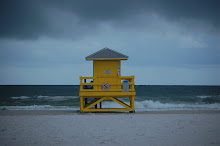
The page is as empty and clean as a sandy beach after a storm.
There are no footprints, no indentations where gulls may have landed, or shallow lines where sea turtles may have crawled.
How do you know where to go?
Must you know your destination before setting off? Or can you simply put one foot in front of another until you discover where you are?
Starting a story... and determining its plot... is a bit like finding yourself on a strange beach, not knowing which way to go to reach civilization. (Hmm... what if you're on a deserted island and walking the beach will only take you in circles?)
So how do you start?
Well, the first question to ask is this: who is walking?
And why is she on the beach in the first place?
And does she know where she wants to go... or what might prevent her from getting there?
To create a plot, you might try begining with a character... and that character's desire for something.
"Something has to happen," writes John DuFresne in The Lie That Tells A Truth, "and characters must make that which happens happen."
DuFresne goes on to share what Henry James wrote about plot: "...it's the character's act of doing that becomes your plot."
Plot then becomes not so much an exploration of that external world of beach and sand, but an exploration of that character's internal world... of what's driving her, motivating her to act (or not act), to decide one thing and not another, to choose to live a certain kind of life.
The action must be motivated, DuFresne writes. It must be causally sequential, credible, and compelling.
"The only thing that keeps us reading," DuFresne suggests, "... is the suspense, the wanting to know what lies ahead, the tension inherent in that mystery. No tension, no plot. No action is interesting for its own sake. Don't confuse motion with movement. Movement is motivated motion."
In other words, every action in a story must evolve out of a character's motivating impulses.
"Random incidents neither move nor illuminate," writes Janet Burroway in Writing Fiction: A Guide to Narrative Craft (5th ed.). "We want to know why one thing leads to another and to feel the inevitability of cause and effect."
"Reasonless action undermines plot," DuFresne agrees. "Plot is all about motive."
Plot is then a record of not only a character's choices but why she made those choices... after she has made them.
It's a map of obstacles that stand in her way, too, a chart showing readers how and why she moved across the beach this way, rather than that way, and reveals the courage (or lack of courage) it took for her to step into the unknown, to pursue whatever she wanted despite the obstacles in her way.
"When 'nothing happens' in a story, it is because we fail to sense the causal relationship between what happens first and what happens next," suggests Burroway. "When something does 'happen,' it is because the resolution of a short story or a novel describes a change in the character's life, an effect of the events that have gone before."
Whenever the character's intentions are foiled, notes DuFresne, we get tension.
As the stakes increase, the journey becomes ever more difficult and challenging.
Plot displays this struggle... so the reader can experience the same struggle (as well as the feelings of success that come from overcoming the odds)... and learn from it something more about the human heart, what makes us human, what compels us to act in certain ways.
You won't find your character's journey on any map or chart.
A compass won't help you either.
What will help is a deep and abiding love for your character... and a desire to fully understand that character's life and dilemma... to know your character from the inside... in order to discover who she is and why the character wants what she wants.
Then... it's a matter of letting her go... and watching her struggle past obstacle after obstacle to reach her heart's desire.
Resources for further study:
Janet Burroway's Writing Fiction: A Guide to Narrative Craft (5th ed.).
John DuFresne's The Lie That Tells A Truth: A Guide to Writing Fiction.
There's no hint of a path, no ripple suggesting a direction, no shadow suddenly appearing as a road on which to walk.
The page is as empty and clean as a sandy beach after a storm.
There are no footprints, no indentations where gulls may have landed, or shallow lines where sea turtles may have crawled.
How do you know where to go?
Must you know your destination before setting off? Or can you simply put one foot in front of another until you discover where you are?
Starting a story... and determining its plot... is a bit like finding yourself on a strange beach, not knowing which way to go to reach civilization. (Hmm... what if you're on a deserted island and walking the beach will only take you in circles?)
So how do you start?
Well, the first question to ask is this: who is walking?
And why is she on the beach in the first place?
And does she know where she wants to go... or what might prevent her from getting there?
To create a plot, you might try begining with a character... and that character's desire for something.
"Something has to happen," writes John DuFresne in The Lie That Tells A Truth, "and characters must make that which happens happen."
DuFresne goes on to share what Henry James wrote about plot: "...it's the character's act of doing that becomes your plot."
Plot then becomes not so much an exploration of that external world of beach and sand, but an exploration of that character's internal world... of what's driving her, motivating her to act (or not act), to decide one thing and not another, to choose to live a certain kind of life.
The action must be motivated, DuFresne writes. It must be causally sequential, credible, and compelling.
"The only thing that keeps us reading," DuFresne suggests, "... is the suspense, the wanting to know what lies ahead, the tension inherent in that mystery. No tension, no plot. No action is interesting for its own sake. Don't confuse motion with movement. Movement is motivated motion."
In other words, every action in a story must evolve out of a character's motivating impulses.
"Random incidents neither move nor illuminate," writes Janet Burroway in Writing Fiction: A Guide to Narrative Craft (5th ed.). "We want to know why one thing leads to another and to feel the inevitability of cause and effect."
"Reasonless action undermines plot," DuFresne agrees. "Plot is all about motive."
Plot is then a record of not only a character's choices but why she made those choices... after she has made them.
It's a map of obstacles that stand in her way, too, a chart showing readers how and why she moved across the beach this way, rather than that way, and reveals the courage (or lack of courage) it took for her to step into the unknown, to pursue whatever she wanted despite the obstacles in her way.
"When 'nothing happens' in a story, it is because we fail to sense the causal relationship between what happens first and what happens next," suggests Burroway. "When something does 'happen,' it is because the resolution of a short story or a novel describes a change in the character's life, an effect of the events that have gone before."
Whenever the character's intentions are foiled, notes DuFresne, we get tension.
As the stakes increase, the journey becomes ever more difficult and challenging.
Plot displays this struggle... so the reader can experience the same struggle (as well as the feelings of success that come from overcoming the odds)... and learn from it something more about the human heart, what makes us human, what compels us to act in certain ways.
You won't find your character's journey on any map or chart.
A compass won't help you either.
What will help is a deep and abiding love for your character... and a desire to fully understand that character's life and dilemma... to know your character from the inside... in order to discover who she is and why the character wants what she wants.
Then... it's a matter of letting her go... and watching her struggle past obstacle after obstacle to reach her heart's desire.
Resources for further study:
Janet Burroway's Writing Fiction: A Guide to Narrative Craft (5th ed.).
John DuFresne's The Lie That Tells A Truth: A Guide to Writing Fiction.
Saturday, January 07, 2006
Muddy Water
Let's start the new year without fooling ourselves.
There are days when the water is going to look like mud--a dark, opaque, impenetrable, ugly liquid without light--and swimming will seem impossible.
Even when you step further and further into the water.... all you'll find will be mud.
But here's the thing: mud may be a necessary forerunner to clarity, and you may need to struggle through it before you reach clear water.
Who ever said writing was straight-forward or linear?
It's a process that involves getting your story down on paper--using any method that works--which means following any thread you're given and pulling to see where it leads.
Sometimes you'll come up empty-handed.
Or find yourself at a dead end.
Or with nothing more than a handful of sludge--or sand--that slips through your fingers after hours of work.
Try not to let yourself get discouraged.
Put the words down in whatever order they come.
Let them simmer and stew.
Cut and paste.
Cross-out, add new words.
Feel the mud squish between your toes! (Take a look at Phyllis Root's marvelous, mud-splattered picture book, Mrs. Potter's Pig, for a refreshing look at the creative process.)
Instead of trying to keep everything neat and orderly, let things sprawl, go in different directions.
Play, lose yourself in mud--the way you used to play when you were a child. (Remember those days when you weren't self-conscious about getting covered with mud?)
Then, all that mattered was the exhilaration and joy of playing, and the freedom to explore the world in your own way.
Letting things come in this way--rather than trying to take control over or force the sequence-- is one of the hardest parts of the writing process for many writers.
When I taught a writing class in Rosemont College's Graduate Program for Writing, Literature and Publishing, some of my students found it hard to believe a story might have emerged from a writer's pen differently than it appeared on the printed page.
We were reading Jack Gantos' Joey Pigza Swallowed the Key, and I wrote to Gantos to ask if he had written the story as it appears in print or in a different sequence.
Here's his response, which he was kind enough to let me share here:
Write to your passion, to what excites you and causes the hairs on the back of your neck to stand up. Try not to worry about the sequence. You can put the pieces in order later.
To get through the muddy water in the year ahead, keep swimming however you can--back stroke, side stroke, dog paddle, crawl--and trust that you'll reach clear water before too long.
The amazing thing about muddy water is that you can't know in advance what you'll find. You need to be willing to swim into the unknown and explore.
There are days when the water is going to look like mud--a dark, opaque, impenetrable, ugly liquid without light--and swimming will seem impossible.
Even when you step further and further into the water.... all you'll find will be mud.
But here's the thing: mud may be a necessary forerunner to clarity, and you may need to struggle through it before you reach clear water.
Who ever said writing was straight-forward or linear?
It's a process that involves getting your story down on paper--using any method that works--which means following any thread you're given and pulling to see where it leads.
Sometimes you'll come up empty-handed.
Or find yourself at a dead end.
Or with nothing more than a handful of sludge--or sand--that slips through your fingers after hours of work.
Try not to let yourself get discouraged.
Put the words down in whatever order they come.
Let them simmer and stew.
Cut and paste.
Cross-out, add new words.
Feel the mud squish between your toes! (Take a look at Phyllis Root's marvelous, mud-splattered picture book, Mrs. Potter's Pig, for a refreshing look at the creative process.)
Instead of trying to keep everything neat and orderly, let things sprawl, go in different directions.
Play, lose yourself in mud--the way you used to play when you were a child. (Remember those days when you weren't self-conscious about getting covered with mud?)
Then, all that mattered was the exhilaration and joy of playing, and the freedom to explore the world in your own way.
Letting things come in this way--rather than trying to take control over or force the sequence-- is one of the hardest parts of the writing process for many writers.
When I taught a writing class in Rosemont College's Graduate Program for Writing, Literature and Publishing, some of my students found it hard to believe a story might have emerged from a writer's pen differently than it appeared on the printed page.
We were reading Jack Gantos' Joey Pigza Swallowed the Key, and I wrote to Gantos to ask if he had written the story as it appears in print or in a different sequence.
Here's his response, which he was kind enough to let me share here:
The first chapter was pieced together after I wrote the first draft. I went back and took the original first chapter--and separated out the "wired" riff and added some new material to it so that it is set in school. That short first chapter reads as the opening notes of a symphony and thematically winds itself through the book. Plus, it is a hook for the readers. If I get them in the first 3/4 pages, then I feel I've got them for good.
As for how I write books, I always start with the juicy parts first: the action and the character voice. Then I work out the transitions and theme and all that jazz. But I go for the best writing first and I don't care if it ends up being the beginning, middle or end of the book. I just want to write something that gets me excited and keeps me going. Writing a book is hard work, so it is important to nail down some scenes which are perpetually whipping me with both enthusiasm and determination.Try Jack Gantos' method of swimming through muddy water.
Write to your passion, to what excites you and causes the hairs on the back of your neck to stand up. Try not to worry about the sequence. You can put the pieces in order later.
To get through the muddy water in the year ahead, keep swimming however you can--back stroke, side stroke, dog paddle, crawl--and trust that you'll reach clear water before too long.
The amazing thing about muddy water is that you can't know in advance what you'll find. You need to be willing to swim into the unknown and explore.
Subscribe to:
Posts (Atom)




 Posts
Posts


